


SHARE
WHAT HAPPENS TO HUMAN HEALTH WHEN OUR ECOSYSTEMS COLLAPSE?
When ecosystems collapse, human lives are in danger because we depend entirely on nature for our basic needs
By Sigrid Vestergaard Frandsen, Director of Environmental Health
10/08/2026
We already know that a hotter world is a more dangerous one for the human body. But there is a second threat building underneath the first. As extreme heat pushes the planet past 1.5ºC, it is also pushing entire ecosystems toward collapse. And when ecosystems break down, human health breaks down with them because we rely entirely on them for our survival.
Throughout human history, nature has quietly done a huge amount of work for us. It cleans our water, grows our food, regulates disease, and even supplies many of our medicines. Scientists call these benefits ecosystem services, and one widely cited estimate puts their global value at around 33 trillion dollars a year, close to the size of the entire global economy at the time it was calculated. We do not pay a bill for this work. We simply depend on it.
That dependence is now being tested. A UNEP report released in September 2026 confirms that the world will pass 1.5ºC of warming, and that low-resilience ecosystems, including coral reefs, mountain systems, and coastal areas, will face irreversible damage as a result. Warm water coral reefs already show damage starting at just 1.2ºC. More than 80% of tropical reefs were bleached between 2023 and 2025. Every fraction of a degree past this point makes multiple hazards worse at the same time, according to the report.
A 2026 editorial in The British Medical Journal put a specific number on how urgent this is. It warned that full ecosystem collapse could begin as early as 2030, with direct consequences for global health and even national security. The editorial describes a spiral: as food systems change, they degrade ecosystems, which threatens health and water security, which further damages food production. Each part of the cycle makes the next part worse.
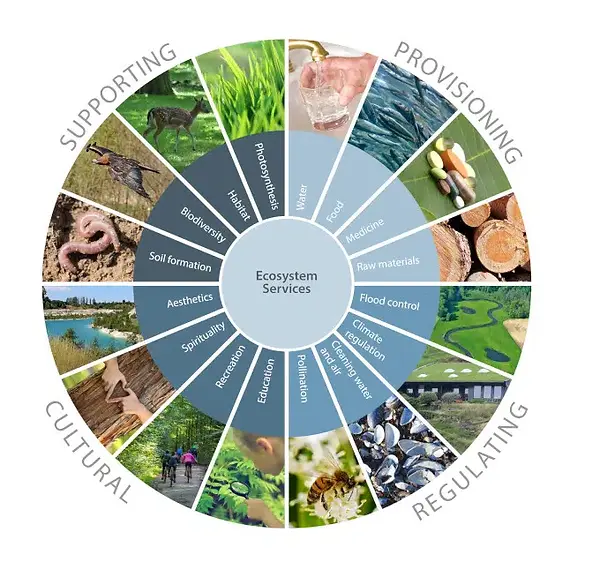
Source: Aarhus University, Department of Environmental Science
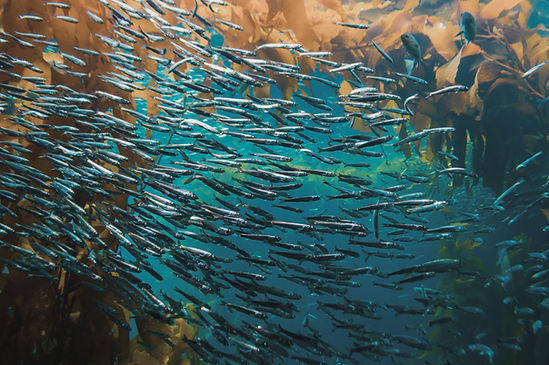
So, what does this actually mean for a person's health?
More than 75% of global food crops depend on natural pollinators, a service worth up to $577 billion U.S. dollars annually to global agricultural output. As pollinator populations decline, that support for the food system weakens. Forests store 80% of terrestrial biodiversity and absorb approximately 2.6 billion tonnes of carbon dioxide annually, helping mitigate climate change and filter the air we breathe. Wetlands, which filter freshwater naturally, have declined by 35% since 1970, a loss tied to rising waterborne disease and reduced water availability for more than 2 billion people.
Another clear link is infectious diseases. Roughly 75% of emerging infectious diseases in humans, including HIV, Ebola, and many others, originally came from animals. When forests are cut down, or ecosystems are disturbed, humans and wildlife are pushed into closer contact, and pathogens get higher chances of jumping between species.
Ecosystems also regulate our immune systems directly, not just through infection. Researchers from UC Berkeley found that a lack of exposure to healthy, diverse natural environments leaves human immune systems poorly calibrated, contributing to rising rates of asthma, allergies, and other immune conditions. At the same time, pollution and wildfire smoke damage the body's protective barriers, adding a second source of harm. The same research found that every dollar spent on climate mitigation saves about three dollars in healthcare costs, a case where prevention is both cheaper and more effective than treatment.
None of this falls evenly. The World Health Organization estimates the global economic cost of biodiversity loss at around 10 trillion dollars a year, and the people who contributed the least to causing it are consistently hit the hardest. This pattern is confirmed by the Global Challenges Foundation, which notes that ecosystem services matter most to those with the least material wealth, so ecological collapse hits them hardest even though they contributed the least to it. Communities that rely directly on farming, fishing, or wild foods for daily survival have the least ability to absorb the loss of these services, and the fewest resources to replace them. As the United Nations Foundation notes, protecting nature and protecting human health have become the same task. And without nature, we are nothing.
This is not only a problem for wild places far away. The US EPA notes that as biodiversity in any ecosystem declines, that system can lose its resilience, meaning its ability to recover after being stressed. A weaker forest, river, or reef is a weaker buffer standing between people and the next disease outbreak, food shortage, or contaminated water supply.
The throughline across all of this is simple, even if the systems involved are complex. As heat pushes ecosystems toward collapse, that loan is coming due, and the people who did the least to run up the debt are the ones being asked to pay it first.